In Priorat, winter is not silence.
It is decision.
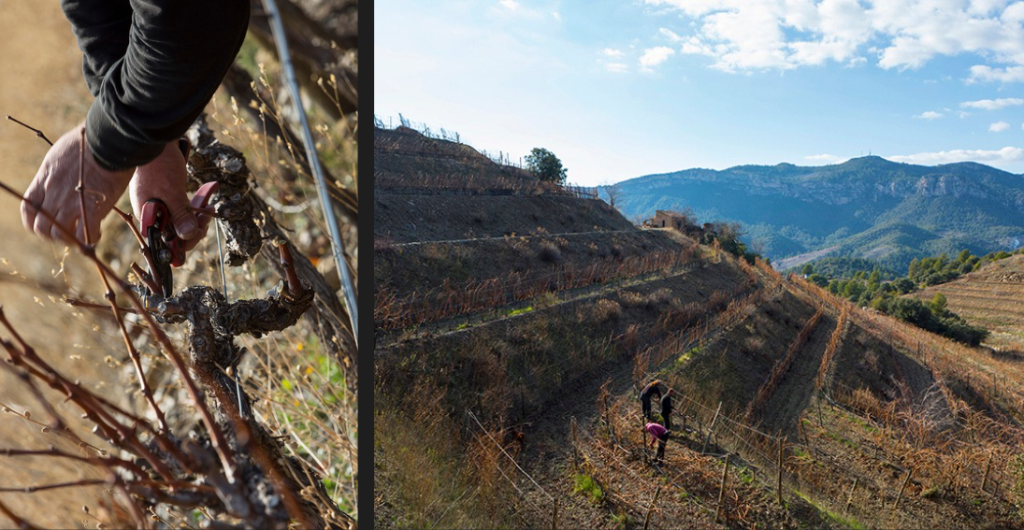
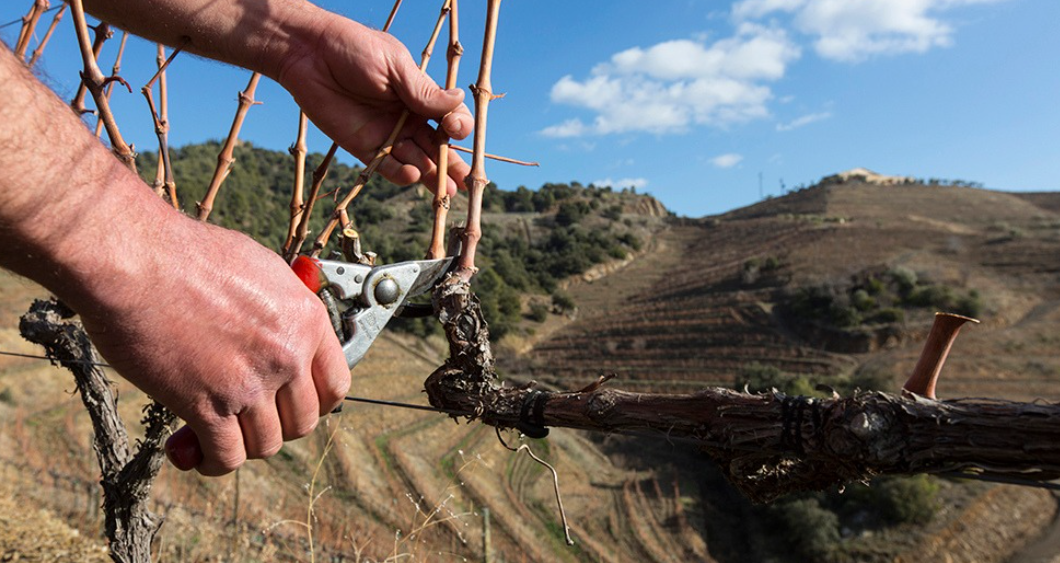
These days, the vineyard stands bare, seemingly still, yet this is precisely when some of the most important decisions of the year are made: pruning. An ancestral gesture that defines the balance of the vine, the amount of fruit it will bear and, to a large extent, the character of the wine to come.
Pruning is not about cutting for the sake of cutting.
It is about reading the plant, understanding its vigour, and respecting its age and its history. Every vine is different, especially in a territory like Priorat, where Llicorella (slate) demands effort, water is scarce and every shoot matters. Here, pruning seeks balance and survival, not abundance.
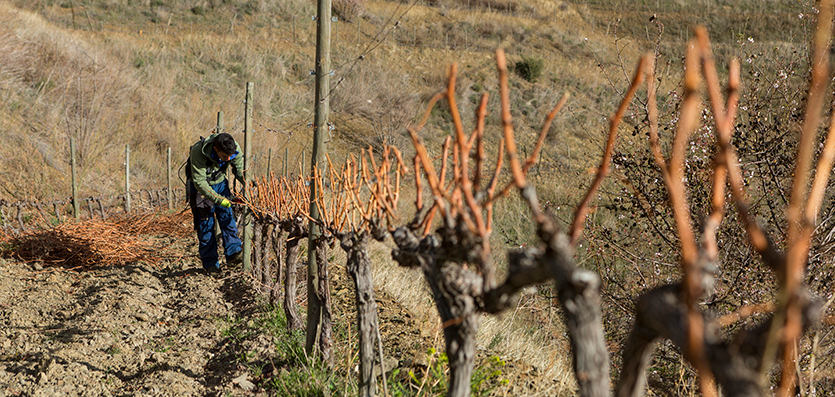
During these weeks, the vineyards are filled with skilled hands working slowly in the cold, observing each cane before deciding what remains and what is removed. The crop load is reduced to protect the vine, its future growth is guided, and the vineyard is prepared to withstand the harsh months ahead.
Pruning is also an act of respect for the landscape. In old vines, many with decades of history, each cut is almost surgical. The aim is to extend the life of the plant, prevent wood diseases, and preserve that intimate relationship between soil, vine and climate that defines our wines.
While the visitor sees a dormant vineyard, Priorat is in fact writing its next vintage. There are no shoots, no flowers, no grapes yet, but the wine begins here, now, in the heart of winter.
Because in this land, every cut is a promise.