



ABOUT US
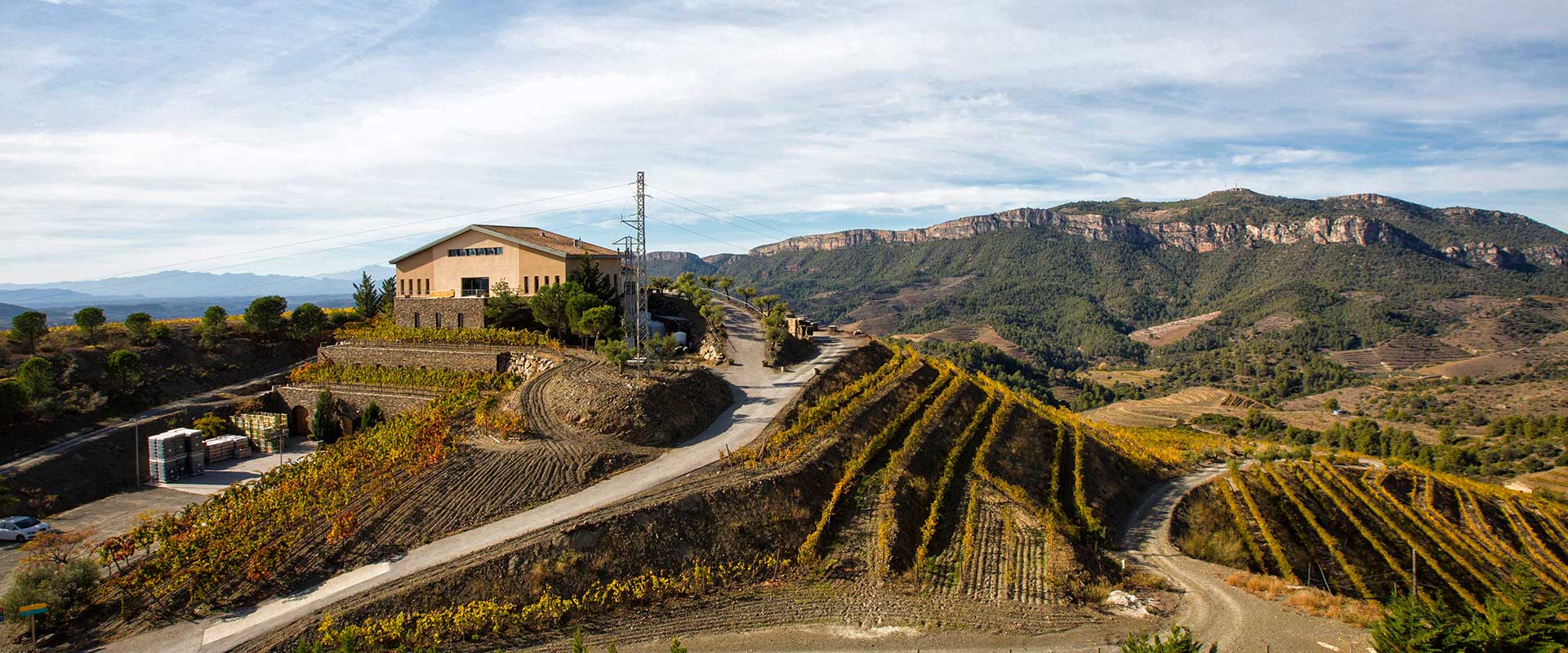
For centuries, both vineyard and wine have been present in the Priorat region. Although it is acknowledged that Romans cultivated the land for the production of wine, it was during the eleventh century that under the protection of the Prior of the Carthusian monastery of Santa Maria de Escaladei that the Priorat, with its characteristic slate “licorella” soils, became a region synonimous to wine making.
Our family have taken an active part in our region’s wine heritage for at least six generations. Above all, we are farmers, growers which have inherited the tradition and expertise passed on along the generations, enriched over centuries by the arrival of new civilisations to this domain close to the mediterranean.
Such cultural abundance has forged a particular lifestyle, a style of life particular to the Priorat.
We are winegrowers, that have decided to share everything with you no matter where you are!
Many things have occurred since the arrival of the Carthusian monks, but the arrival of the Phylloxera epidemic to Porrera in 1893 marked a clear turning point in our history.
A life connected to Priorat
Phylloxera reaches Porrera
Thirty years after the first European outbreak was detected in Pujaut, France, phylloxera reaches Priorat.
On 27 June, it appears in the Solana de les Viudes area of Porrera and, within three years, spreads throughout the region. A long period of depopulation and decline begins.
Replanting the hillsides with American rootstock
The families who had remained in the region begin restoring the hillsides by planting vines grafted onto American rootstock.
It is not until late 1909 and 1910 that significant replanting takes place across the region.

Joan Giné is born
The fourth generation of a farming family originally from Els Guiamets.
First attempt to obtain recognition for the wine region
The Government is asked to recognise the Priorat de Scala Dei wine-growing area. A second attempt is made in 1928.
Following the approval of the Wine Statute in 1932, the official proceedings begin, although the Spanish Civil War and the harsh post-war period delay their completion.
Evarist Giné dies while working in the vineyard
Joan Giné loses his father. Paradoxically, this circumstance allows him to continue into secondary education.
He becomes one of the most educated people in the village and develops a deep understanding of the importance of education.
Spanish Civil War
The process of obtaining official recognition for the Priorat Designation of Origin is halted, and the crisis once again strikes the region.
The economy collapses, depopulation continues and many families survive through subsistence farming.
Joan Giné, president of the Falset Cooperative
Joan Giné is elected president of the Falset Cooperative for the first time, a position to which he will be re-elected on three occasions.
He stands out for his efforts to provide training for the cooperative’s members and their children.
Fr Jaume Ciurana i Sans arrives in Falset
The new parish priest leads an educational movement together with families committed to the region.
This initiative helps establish a vocational training centre offering agricultural studies and, later, courses in oenology.
First regulations of the Priorat Designation of Origin
The first regulations of the Priorat Designation of Origin are finally approved, following decades of attempts and demands for official recognition.
Family, Falset and Priorat
Josep M. Buil, Xavi’s father, continues the family’s commitment to the region.
The family settles in Falset and becomes closely involved with the Priorat Educational Association, where Xavi Buil and his siblings complete their primary education.
The first “new” Priorat wines are produced
The wines are released in 1991. Xavi experiences this period at close hand, meets its key figures and shares the outstanding wines they produce.
A commitment to sharing and preserving Priorat
Xavi Buil decides to devote his career to sharing the Priorat way of life through its cuisine and its wines.
With the support of his family, Xavi Fusté and Anna Cuadrat, he founds Priorat Natur and Buil & Giné.
The first wine, Giné Giné 1997, reaches the market
Buil & Giné’s first wine is launched. At the same time, old vineyards in Bellmunt del Priorat and La Vilella Baixa are restored.
Joan Giné 1999 is selected as a Smart Buy
Wine Spectator recognises Joan Giné 1999 as a Smart Buy, strengthening the winery’s international reputation.
Production of the first Mas Giné
Mas Giné is produced for the first time: an exceptional, exclusive wine destined to become highly sought after by collectors and wine experts.
Internationalisation and expansion
The concept of elegant, refined and versatile wines is warmly received. The winery grows and begins selling its wines across four continents.
From 2003 onwards, it also begins producing wine outside Catalonia, in the Rueda and Toro Designations of Origin.
Opening of the new winery in Gratallops
A new winery equipped with advanced technology opens, designed to ensure meticulous attention throughout the winemaking process.
It is also the first winery in the region specifically designed to welcome visitors.
Promoting Priorat in Switzerland
Buil & Giné carries out an extensive campaign to promote Priorat in the Swiss market, helping communicate the quality, identity and distinctive character of the region’s wines.
The Family Collection and entry into China
The Family Collection project is completed and the first wines in the range are produced.
The winery’s international expansion reaches China, one of the last major markets still to be explored.
Buil & Giné Luxe
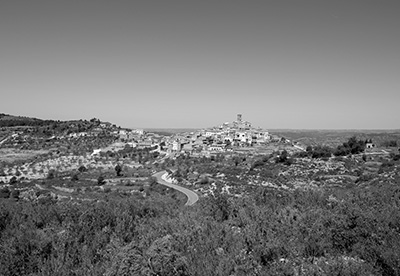
Buil & Giné and its Family Collection enter the most exclusive market and gain recognition among experts and collectors across all five continents.
The Family Collection is unveiled
After seven years searching for the finest plots and grapes, the winery presents a collection created from some of the most extraordinary corners of Priorat.